Why can't IPv6 be managed with conventional tools?
IPv6 is the answer for many to the scarce IPv4 address space. However, other criteria were also taken into account during IPv6 development, such as increased flexibility in network structuring. Simply extending a conventional tool with the longer address notation would not allow the further benefits of IPv6 to be exploited.
There's no getting around IPv6.
Fundamentally, software support for management is indispensable with IPv6 due to the vast address volumes. Even if the supplies currently used by your own company are still manageable, enormous changes are imminent in this regard, given the current developments in the data centre sector. To give an example, intelligent power sockets should be mentioned, which will need to be assigned IP addresses in large numbers as part of modern power management. Added to this are agents and sensors for power and climate monitoring, which will be standard equipment in every data centre in a few years.
Don't lose track of IPv6
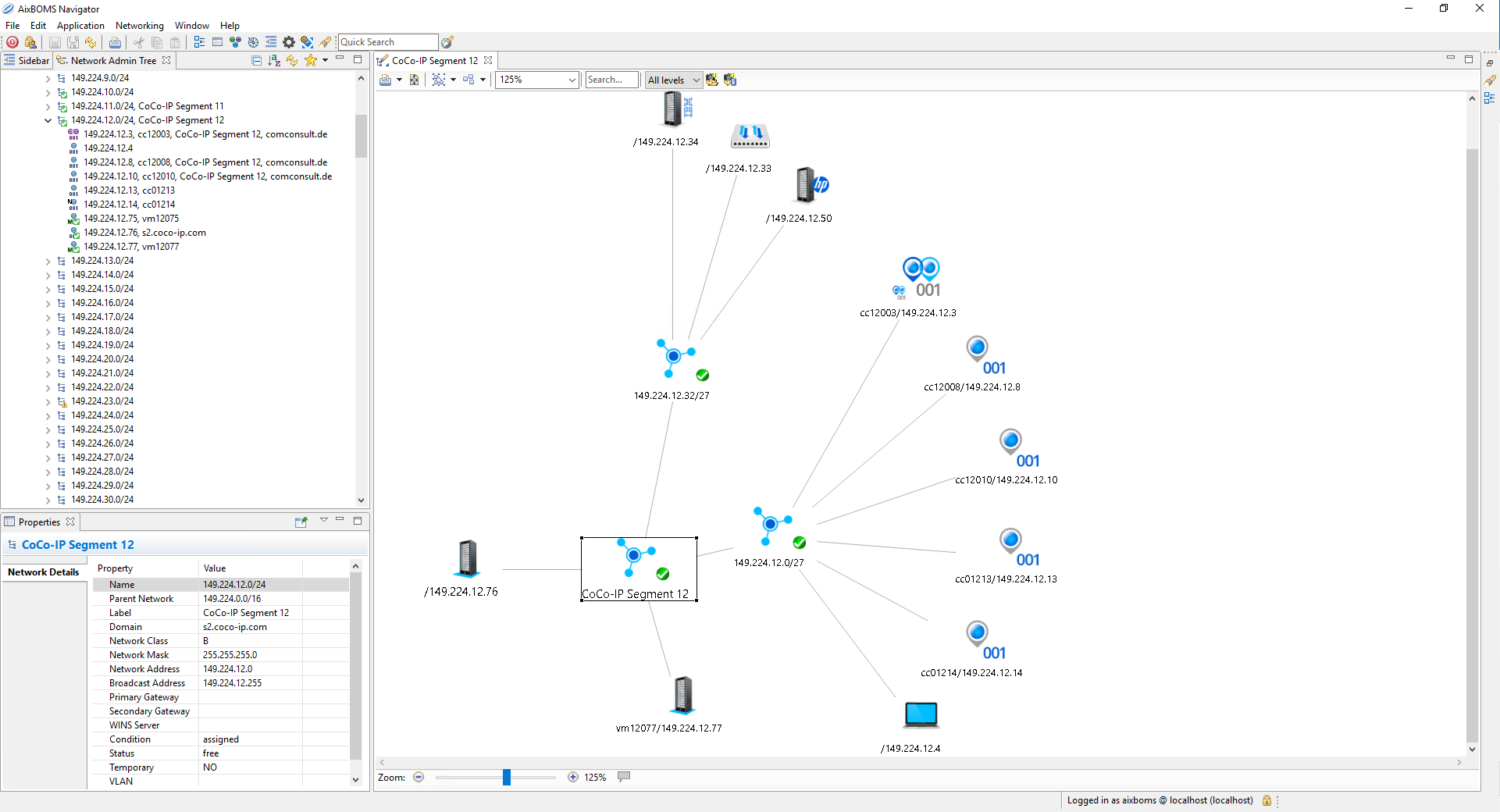
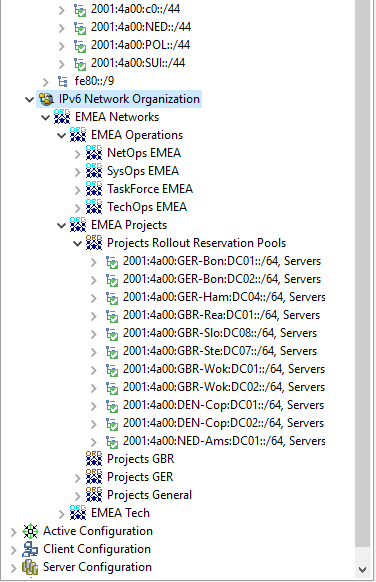
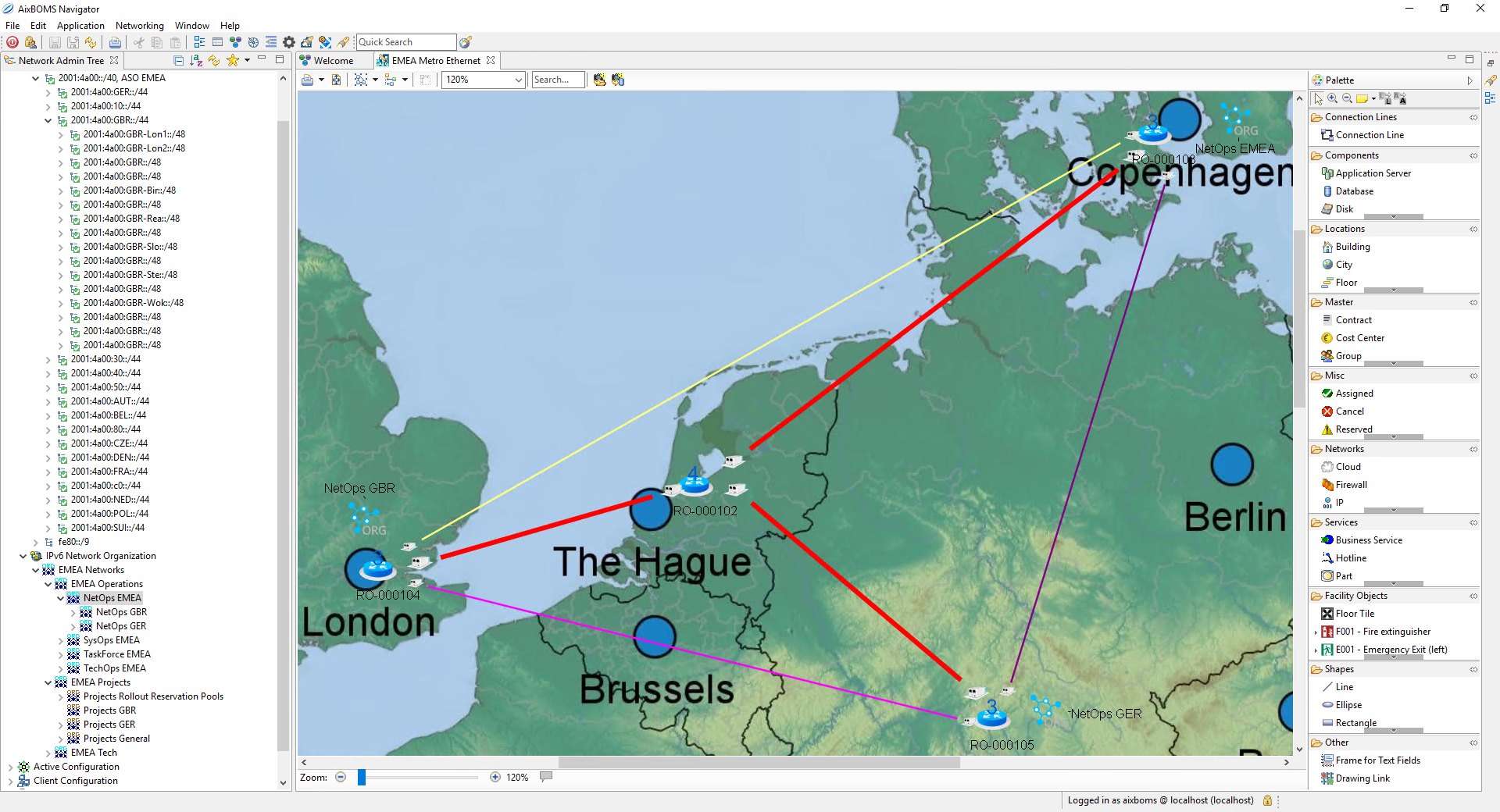
IPv6 address notation is also difficult for experienced networkers to read. Customised labelling can help with this, but it needs to be specially managed. AixBOMS is ideally suited for this. You also mustn't lose sight of the more flexible subnetting techniques. Networkers can now use not only physical and geographical conditions, but also logical criteria for grouping address ranges. For example, workgroups can be grouped together across different locations, which simplifies administration for many large companies. The algorithms for this need to be redeveloped – but more importantly – an overview is needed that is easy to understand and can be used to work securely and in compliance with IPAM.
Subnetting and representation of the network structure
Just as with IPv4, AixBOMS provides two wizards for IPv6 subnetting: one for symmetrical and one for individual division. Their comfortable and secure operation is analogous to that for IPv4; no re-learning is necessary.
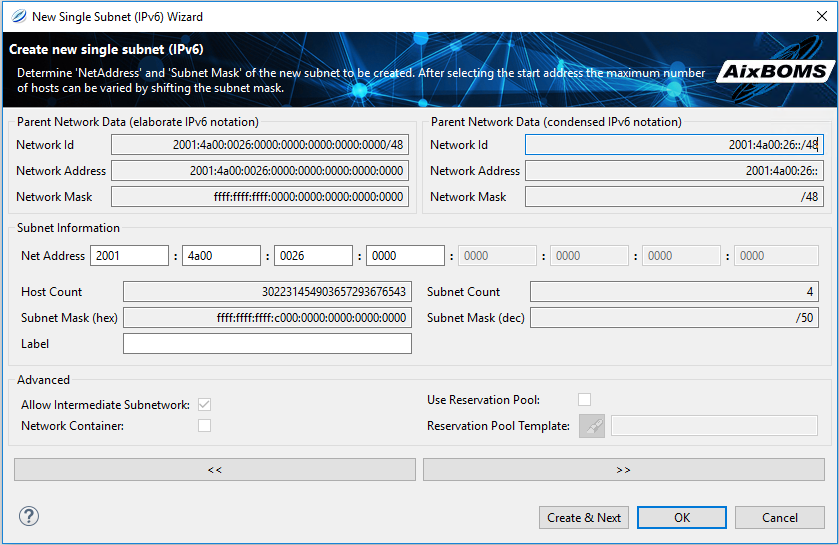
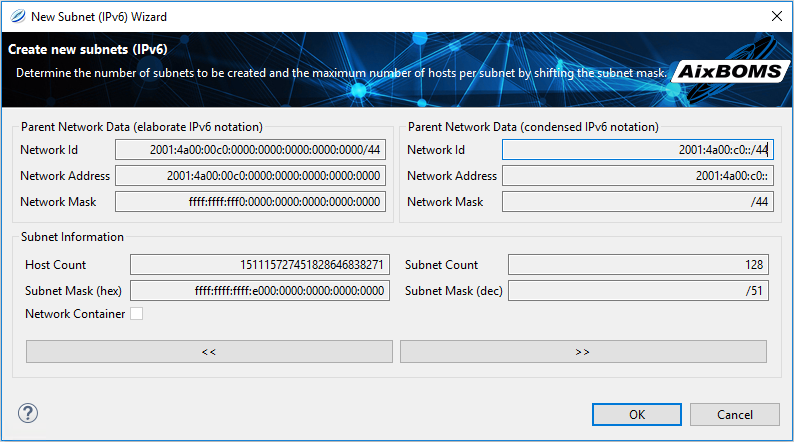
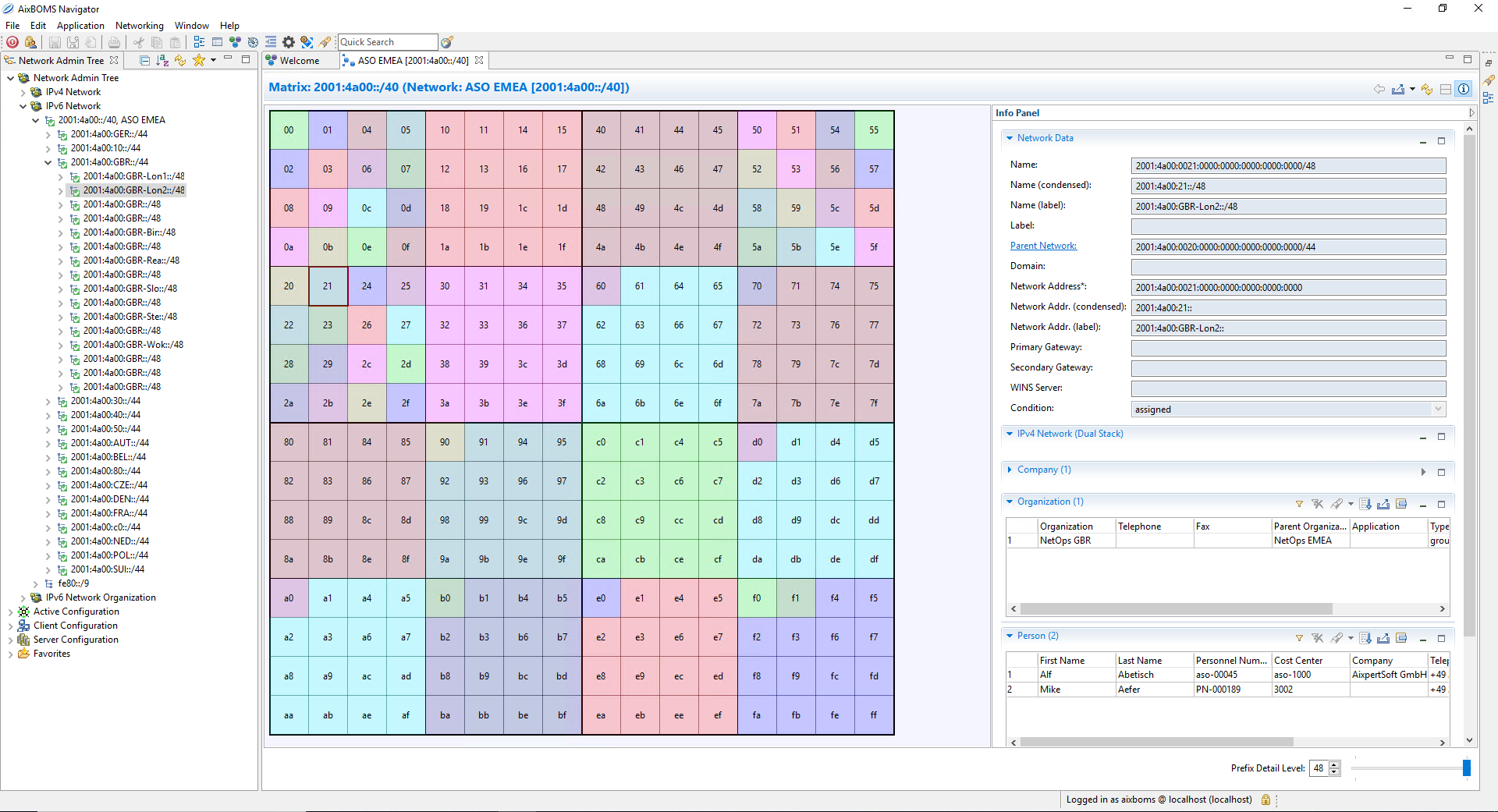
The representation of the network structure, as you are used to with IPv4, is not suitable for IPv6. That is why we have developed the Matrix Editor, which displays the current subnet status in an IPv6-compliant and clear manner. It also supports graphics-based standard operations and switching to other network levels with a double-click. Detailed information about the selected subnet is displayed in an info panel, and further information can be accessed immediately via context menus.